Best Time to Visit Playa Hermosa (Jacó), Costa Rica: Turtles, Surf and the Green Season
The best time to visit Playa Hermosa depends on what you want to see. December to April is the driest and the calmest. May to November is the greenest, the quietest and the biggest for surf. June to December is when olive ridley turtles nest on the beach in front of Amarena Canvas Beach Hotel.
If you’re planning a trip to Costa Rica’s Central Pacific coast, you’ve probably been told to come in the dry season. That is good advice, right up until your only free weeks are in July, or the kids get out of school in August, or the whole point of the trip is to have the beach to yourselves.
Every month in Costa Rica is a good month to visit. They are just good in different ways.
One thing to clear up first. There are two Playa Hermosas in Costa Rica. Amarena is in Garabito, Puntarenas, between Jacó and Esterillos on the Central Pacific coast. The other is up in Guanacaste, about four hours north.
Below is a month-by-month guide to what each part of the year is like here, when the turtles come, when the surf turns on, and how to pick your dates.
Ready to plan your dream beach vacation in Costa Rica? Check availability today.
When is the best time to visit Playa Hermosa?
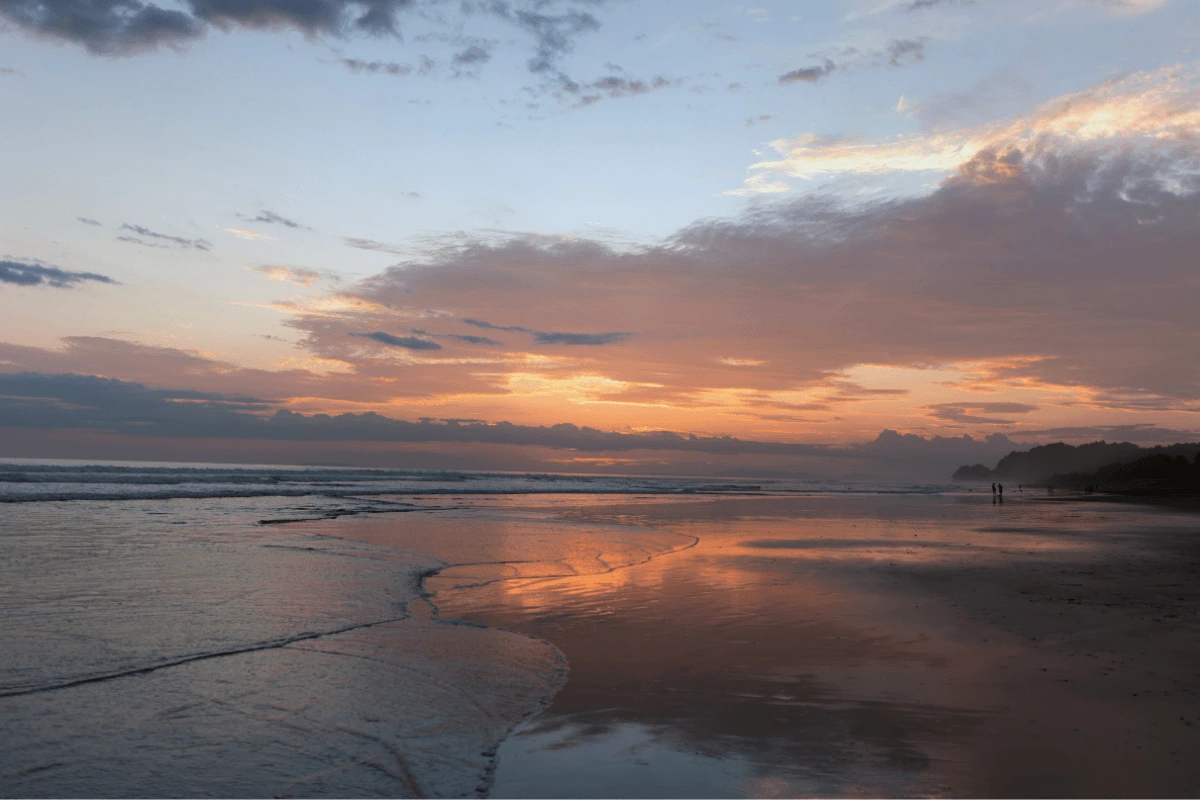
Costa Rica has two seasons rather than four, the dry season from mid-December to late April and the green season from May through mid-December. We are nine degrees off the equator, so the year here gets divided by rain rather than by temperature. It stays warm all year, days and nights.
Our own high season runs from December to just after Semana Santa. The green season, roughly May to November, is our low season on paper and our favourite stretch of the year in practice.
If you want the sunniest days and the driest weather, come between December and April. It is a reliable bet every year, and it is the busier stretch.
If you are planning to visit over Christmas or New Year, know that those dates go first. Book well ahead and check the calendar as early as you can.
If clear mornings and an hour of afternoon rain sound fine to you, look at May to November. We call it the green season, because that is what it does to this coast. It is also when the turtles come and when the surf gets serious, which is most of the reason we have written this guide the way we have.
When do the sea turtles nest in front of the hotel?
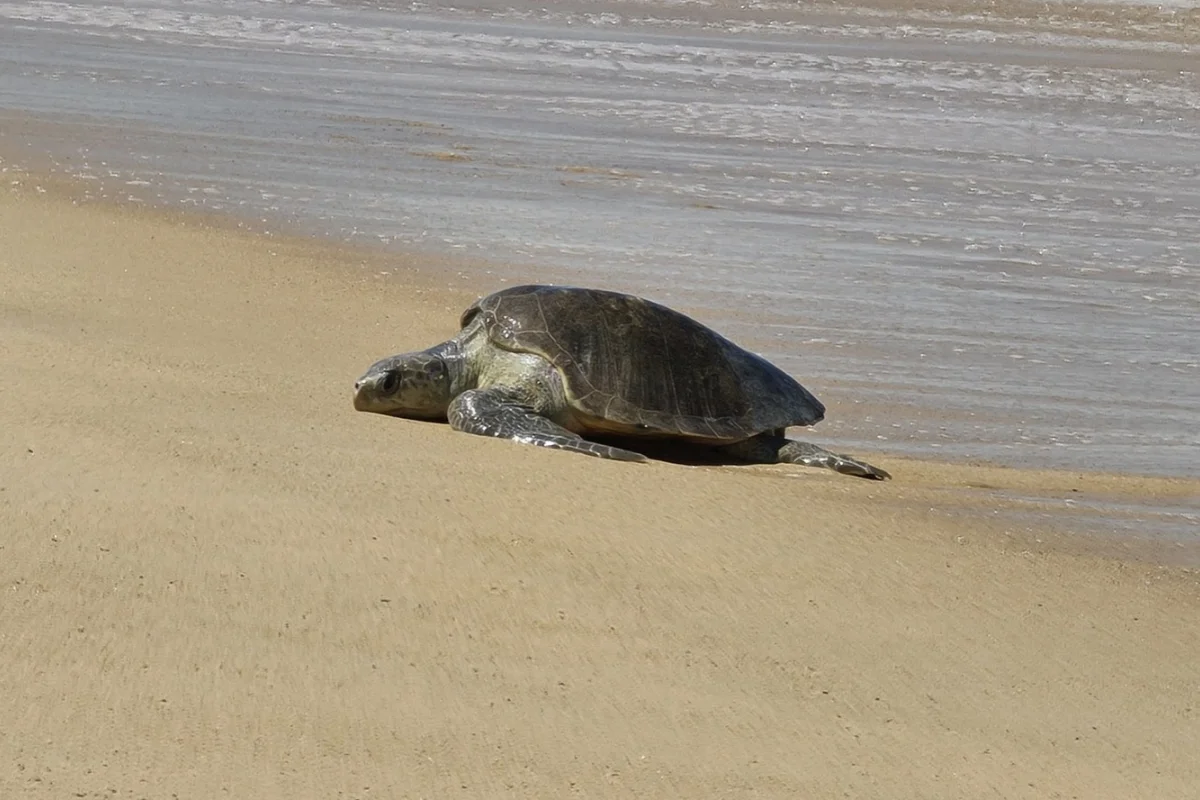
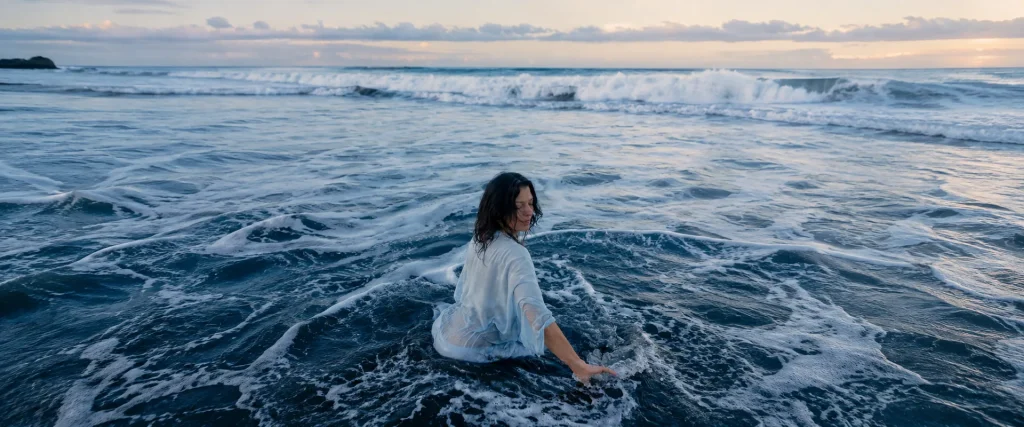
The months with the fewest crowds are the months the turtles come. Step out of your luxury villa at Amarena Canvas Beach Hotel in October and you are standing on a protected nesting beach. The Playa Hermosa–Punta Mala National Wildlife Refuge runs along the sand in front of us.
It was created in 1998, and there is more of it in the water than on the sand, close to twenty-three square kilometres of protected ocean against under four of beach and wetland. Mass nesting comes ashore mainly between June and December. Olive ridleys are the ones you are most likely to meet, and up to four species have been recorded here, including the leatherback.
A female hauls up past the tide line, digs, and works for an hour or so before she leaves between 80 and 120 eggs behind her and goes back to the water. Those nests get counted. Místico, the 865-acre community we sit inside, is monitoring them through the 2026 season with the national marine turtle programme.
By morning there is nothing left to see but the tracks. Two curved lines about a metre apart, running up out of the water, turning, running back down, and a patch of disturbed sand between them. Your kids will still be describing it on the flight home.
When is the surf best at Playa Hermosa?
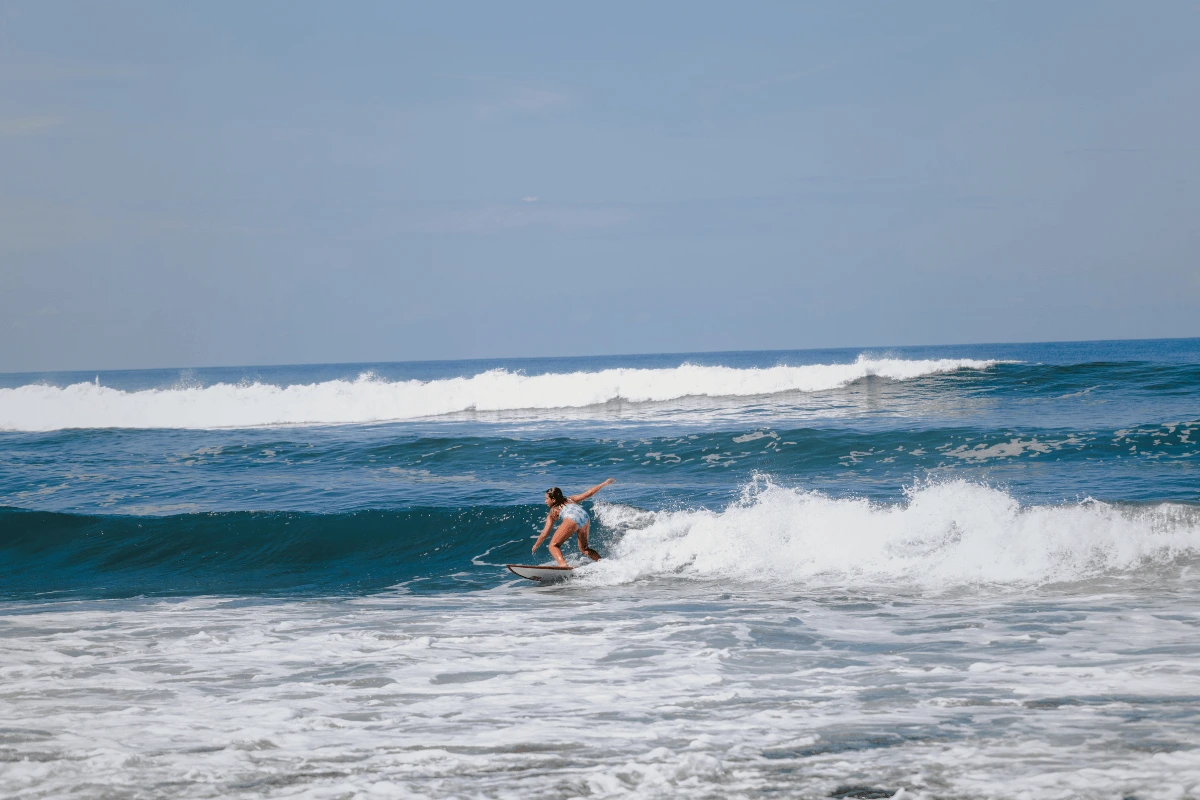
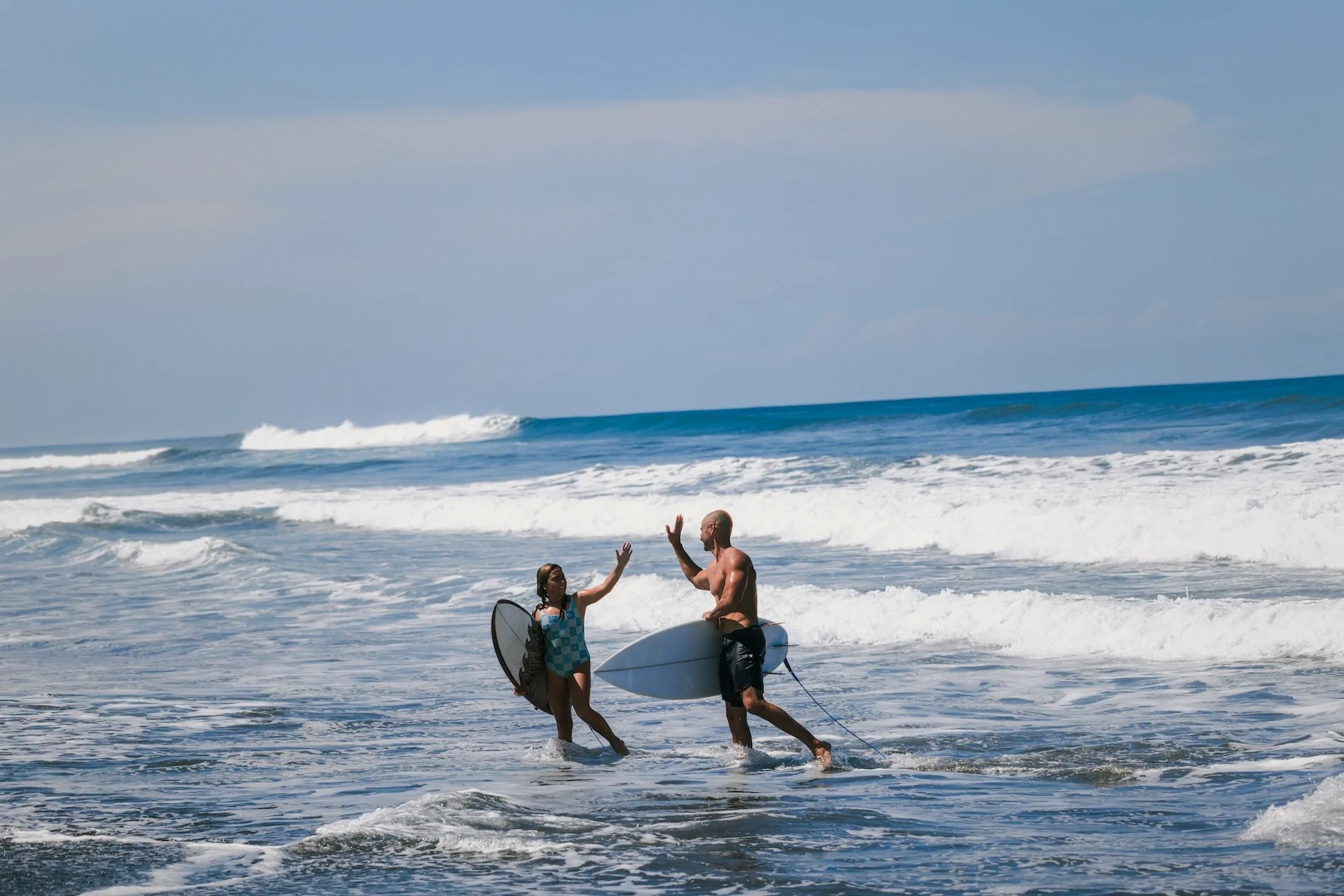
Playa Hermosa is a south-southwest facing beach break, and it runs at its best from April through October, which is the green season almost exactly. Southern hemisphere groundswell arrives with long periods and real power behind it, and the water in front of the villas holds size in a way the beaches north of here do not.
This is an advanced wave. It breaks hard, it breaks close to shore, and it is not the beach where you learn. We can take beginners up to Playa Jacó, six kilometres north, where the whitewater reform at low tide is gentler and the lessons happen.
Swell drops during the dry months, but the cleanest offshore mornings also land in the dry months, when the wind comes off the land from the northeast and grooms the face before the sea breeze turns up. So December to March is smaller and cleaner. June to September gives you bigger swell but sometimes messier.
What the green season is like at Playa Hermosa
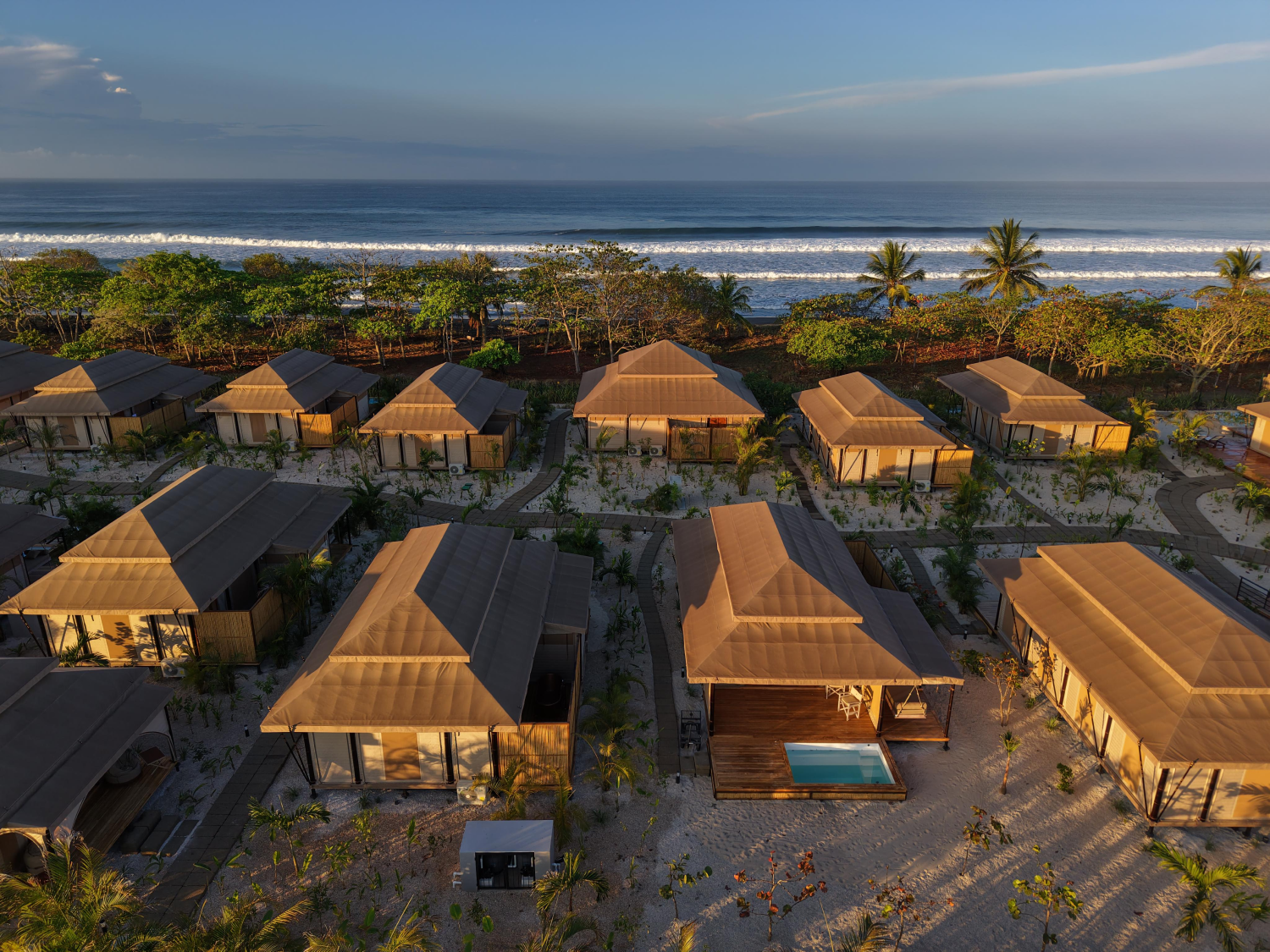
Wondering what the green season is like in Playa Hermosa?
Mornings come up clear. Clouds build inland over the mountains through the middle of the day, and the rainfall arrives in the afternoon, after the day has already been spent.
So you get your morning. The rain turns up about when you are ready to sit down anyway, and you sit under canvas and listen to it, which is one of the better reasons to be in a tented villa.
Behind the villas the jungle is lush in a way it cannot be in March. Waterfalls inland run hard. Birds are loud from five in the morning. The trees hold water and everything smells like it.
Then there are the whales. The water from about Jacó, six kilometres north of us, south to the Osa Peninsula gets two separate humpback migrations, December through April for the northern whales, then July until about November for the southern ones. Humpback whales, nesting turtles and the best swell of the year all land in the same weeks, which is a fair argument for coming in the low season.
What high season is like at Playa Hermosa
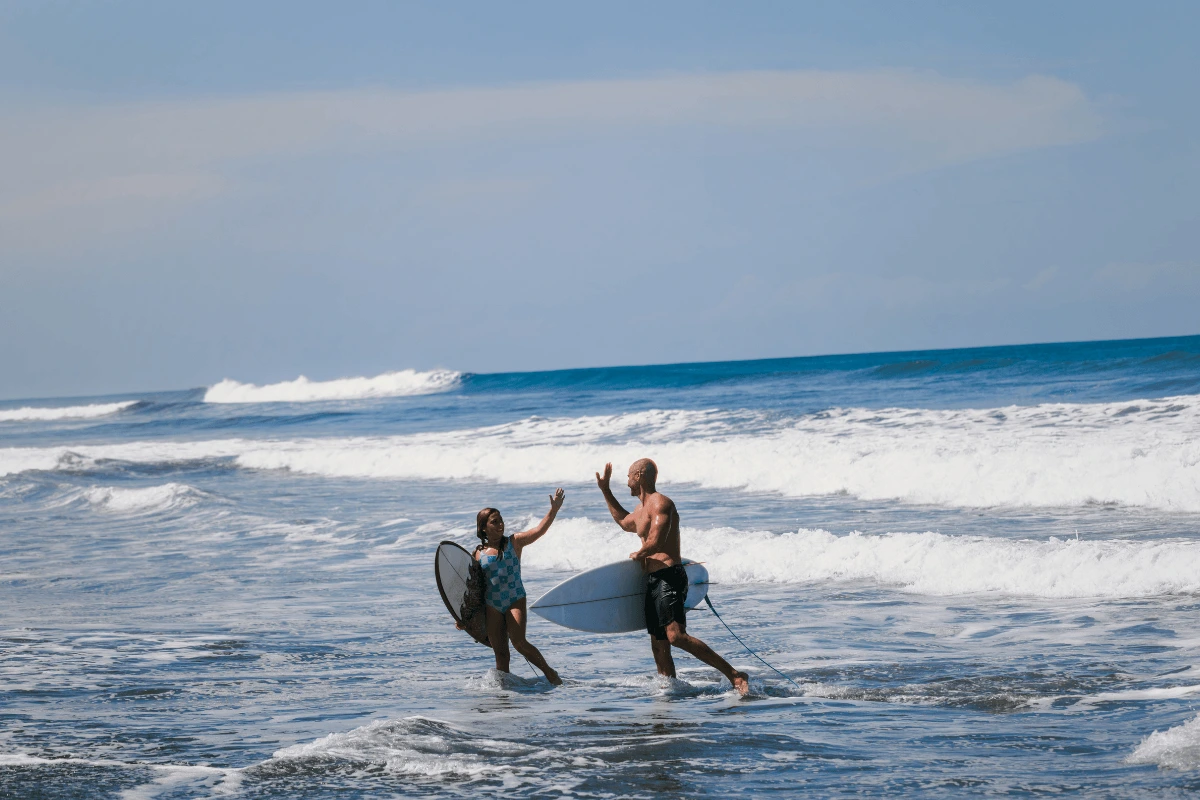
You get the driest sky of the year from about the middle of December until Easter. January and February are the driest weeks here, with sunny weather most days, warm nights, and the best weather for anyone who wants to be outside from breakfast to sunset.
This is when the country is at its busiest and when our dates go first. Check your dates early if you plan to visit between Christmas and Semana Santa.
Playa Hermosa month by month
January and February: The driest, brightest weeks. Long dry mornings, offshore breeze, water warm enough that nobody hesitates. Surf is smaller and cleaner than it will be in July. The best months if reliable sun is the thing you want.
March and April: Still dry, hotter each week, and the Pacific Ocean at its warmest. The south swell starts filling in through April. Semana Santa lands in late March or April depending on the year and the country moves to the beach for it.
May: The rain comes back and the crowds go home. A quiet month to visit and a good one to watch the jungle turn verdant. Swell is building.
June: Turtle nesting starts. Mornings clear, afternoons wet, the jungle already thick, and the surf getting heavier week by week.
July and August: The southern humpback whales arrive and stay. Rain settles into an afternoon habit you can plan a day around, the swell is at full strength, and the northern school holidays bring a few more people to the sand.
September and October: The greenest, emptiest weeks of the year on this beach, with nesting in full swing and warm water. For anyone who wants the sand to themselves, this is a great time to visit.
November: The rain thins out, the air turns drier, the jungle stays green, turtles are still coming ashore. Late November is the sweet spot, and it is the stretch we would book for ourselves.
December: The best of both worlds. Dry weather from mid-month, the last of the nesting season, and the northern humpbacks showing up again toward the end of it. High season starts and runs until after Easter.
How far is Playa Hermosa from San José?
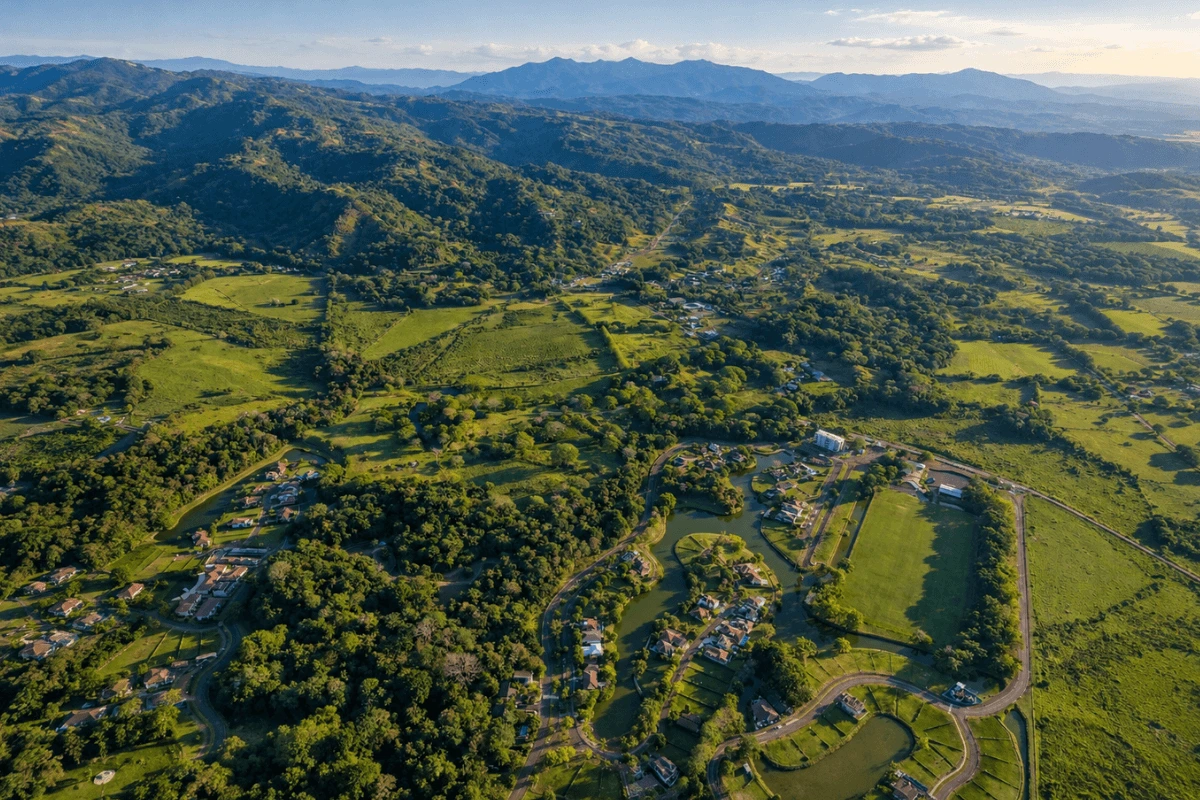
San José, Costa Rica’s capital, sits inland in the Central Valley, and Juan Santamaría airport is ninety-four kilometres from us, about an hour and a half. Most of our guests fly down from the United States or Canada, land in the morning, and are in the pool by lunch.
That short transfer is most of the argument for basing yourself here. Exploring Costa Rica from one base beats moving hotels every second night, whichever season you pick, and this is one of the few beaches close enough to the airport that the first day of your trip is still a day.
How to pick your month
If reliable sun is the priority, come between December and April and book early. If you want the beach close to empty, the jungle at its greenest, turtles hauling up the sand at dusk and the biggest surf of the year, come between May and November. If you want the two overlapping, come in late November or the first half of December.
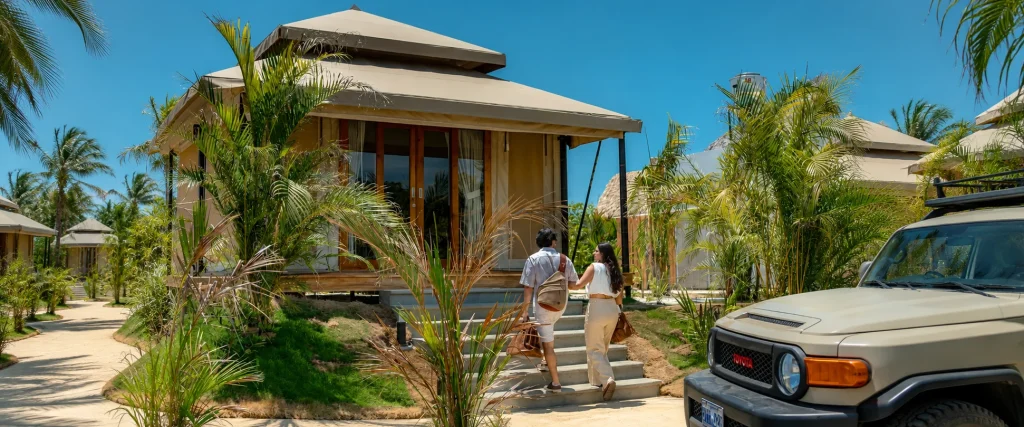
Have a look at our tented villas, then check your dates and see which month is still open.
Frequently Asked Questions
When is the best time to visit Playa Hermosa, Costa Rica?
For dry, sunny weather the best time is January to April, when this coast sees the least rain. For wildlife, surf and space, June to November is the stronger answer, because that is when olive ridley sea turtles nest here, when the south swell is at full strength, and when the beach is at its quietest. The best time of year to visit Playa Hermosa depends on which of those two you are travelling for.
When can you see turtles at Playa Hermosa?
The Playa Hermosa–Punta Mala National Wildlife Refuge sits in front of the hotel and protects an olive ridley nesting beach. Mass nesting happens mainly between June and December, and up to four species have been recorded here, including the leatherback. You watch from a distance, at night, with no white lights.
Is Playa Hermosa good for beginner surfers?
No. Playa Hermosa is a heavy, fast beach break and it suits confident intermediate and advanced surfers. Beginners are better off at Playa Jacó six kilometres north, where the low-tide whitewater is gentler and most of the lessons happen. The swell here is at its biggest from April through October.
What is the rainy season like at Playa Hermosa?
Costa Rica’s rainy season on this coast usually means a clear morning and an hour or two of heavy afternoon rain, rather than all-day grey. You get your beach time before lunch and your pool time during the downpour. The jungle is at its greenest and the beach is at its emptiest in the same weeks.
Is May a good month to visit Playa Hermosa?
May is a good month to visit and an underrated one. The first rains arrive and the whole coast turns green inside a couple of weeks, the high-season crowds have gone home, the sea is warm and the swell is filling in. It is also the start of the long quiet stretch that runs to November.
When is the best time to go whale watching near Playa Hermosa?
Whale watching works in two windows on this coast, roughly December to April for the humpbacks that summer off North America and July to November for the ones that come up from the south. Boats work the water from Jacó south toward the Osa Peninsula. July to November lines up with turtle nesting, so that half of the year gives you both.
How far ahead should we book for high season?
Book December to April as early as you can. There are only sixteen villas here, the beachfront ones go first, and Christmas, New Year and Semana Santa are the tightest dates of the year. Green season dates are far more forgiving, though the best villas still go before the rest.
Any travel tips for a green season trip?
Bring shoes you do not mind getting wet, plan the outdoor part of your day for the morning, and let the afternoon rain happen. Ask us about the tide before you walk the beach, because low tide doubles its width here. A car helps if you plan to move around, and we can arrange transfers if you would rather not drive.
Does it ever get cold, and how hot does it get?
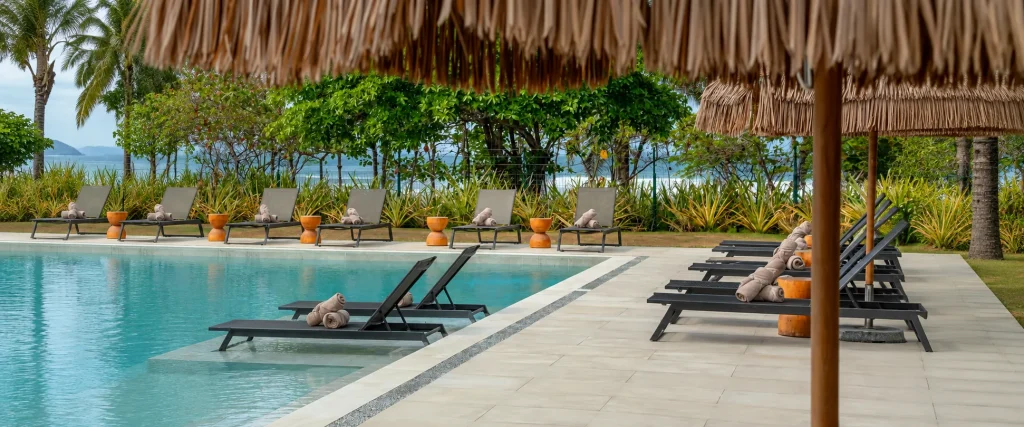
The temperature on this part of Costa Rica’s Pacific coast holds steady all year, warm days and warm nights, so there is no cold season to plan around. Dry-season afternoons feel hotter because the sky stays clear and nothing breaks the day. Every villa has air conditioning, plus a private pool and an outdoor bathtub for the hours in between.